Quick answer: From 1 November 2026 you pay the full price at the register, including consumption tax, and the tax comes back to you after customs checks your purchases on the way out. The check happens before security, not after, so you need to be at the airport earlier than you think. What decides which system applies to you is the date you bought the item, not the date you fly home.
First, check the date you bought it
This is the part most guides get wrong, so start here.
The new system applies based on the date of sale, not your departure date. That is written into the law itself, in the supplementary provisions of the amending act. The National Tax Agency states it plainly in its own explanation of the refund method: the system applies from sales made on or after 1 November 2026, and not from the traveller's departure date. I read the Japanese original rather than a summary of it, because this is exactly the kind of detail that gets flattened in translation.
So:
- Bought something tax-free on 31 October and flying home on 10 November? You are on the old system. You already got your discount at the register. There is nothing to collect at the airport and no new procedure to follow.
- Bought something on 1 November? You paid the tax, and you need to complete the customs step described below.
There is also no overlap period. The Agency says there is no transition window where shops can run both systems side by side. On 1 November, at midnight, every tax-free shop switches.
If your trip straddles the date, the practical answer is that your receipts split into two piles, and only the November pile needs anything from you at the airport.
What actually changed
| Until 31 October 2026 | From 1 November 2026 | |
|---|---|---|
| At the register | You pay the tax-free price | You pay the full price, tax included |
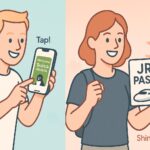
| What you do there | Passport scanned, done | Passport scanned, and you register how you want your refund paid |
| At the airport | Customs check after security, inside the restricted area | Customs check before security, in the general access area |
| Deadline | None in practice | Leave Japan within 90 days of the purchase date |
| Sealed bags for consumables | Required | Abolished |
| Getting the money | Already deducted | Refunded by the shop or its refund agent after customs confirms |
Checked against National Tax Agency and Japan Tourism Agency materials in September 2026. Both publish in Japanese first, and the English leaflets follow.
The official name for the new system is the Refund Method. The machine you will be looking for is called a terminal for tax-free procedures.
The part that will catch people out
Under the old system, the customs desk sat past security, in the departures area where the duty-free shops are. You could check your bags, walk through, and deal with it later.
That is now reversed. The customs check happens before you clear security, in the general access area, which means the public part of the terminal where anyone can walk in. The Japan Tourism Agency leaflet puts it in bold: arrive at the airport early and complete the procedure at the terminal provided for tax-free procedures.
There is a harder edge to this. The National Tax Agency's own Q&A says the customs confirmation cannot be received after you have checked your luggage. Not "should not". Cannot. If your shopping is inside a suitcase that is already on the belt, the refund is gone.
The order you want is:
- Arrive at the terminal with your purchases accessible
- Present your passport at the tax-free terminal
- Green result, you are done. Red result, go to the customs counter and show the goods
- Then check your luggage at the airline counter
- Then security
Under the old order, running late meant a queue at a desk you passed after security, and the cost of getting it wrong was a few minutes. Under the new order, the same delay happens before check-in, and the cost of getting it wrong is the whole refund. If you are the sort of traveller who arrives ninety minutes before a flight, this change is aimed at you.
One receipt, all or nothing
This is the rule I expect English-language guides to miss, and it is the one that will cost people real money.
Customs inspections are conducted per purchase transaction, meaning per receipt. The official FAQ says that if you are not in possession of even one item included in a single purchase transaction, none of your goods will be eligible for customs inspection, including the others you bought on that same receipt. The government's own diagram labels that outcome "No tax exemption for any goods".
Work through what that means. You buy three things at one shop on one receipt: a ¥3,000 item, a ¥75,000 item, and a ¥13,000 item. You give the ¥3,000 one to a friend before you fly. At the terminal you are missing one item from that transaction, so the ¥75,000 and the ¥13,000 items lose their refund too.
Two habits protect you:
- Keep everything from a single receipt together until you have cleared customs
- If you are buying gifts you intend to hand over in Japan, ask to pay for them separately
That second one costs you nothing and takes ten seconds at the till. I would do it every time.
Things that quietly disqualify you
The sealed bag requirement for consumables is gone, which sounds like a relaxation. The rule underneath it has not changed: if you use or consume food, drink or cosmetics inside Japan, those items are no longer eligible for a refund. What the bag used to do was make that obvious at a glance, both to you and to the officer at the desk, and nothing has replaced it.
The others worth knowing:
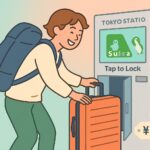
- Forwarding your luggage to the airport breaks this. Sending bags ahead from your hotel is one of the genuinely great conveniences of travelling in Japan, and here it works against you. Your purchases have to be with you, in front of a customs officer, before you check in. If you use a forwarding service, keep the tax-free shopping out of it and carry it yourself.
- Domestic connections. If you fly a domestic leg before your international flight, you complete all refund procedures at the airport you actually leave Japan from.
- The 90-day clock. Customs has to confirm your goods within 90 days of the purchase date. This only bites on long trips or on things bought at the start of a multi-month stay.
- High-value items. For goods costing ¥1 million or more excluding tax, customs may ask for certificates of authenticity or warranty documents alongside the item.
- Quantity. The rule is what you can personally carry out of Japan. Buying twelve identical items and calling it personal use invites questions.
- Not taking the goods out. If you clear customs and then leave the goods in Japan, the exempted tax is collected from you and a penalty applies.
Seven airports where you can skip the terminal
You can complete the procedure through Visit Japan Web instead of queueing at the terminal, but only at certain airports, and only inside the designated areas of the international departure lobbies where a dedicated wireless network is provided for it.
The official list is seven airports: Narita, Haneda, Kansai, Chubu, New Chitose, Fukuoka and Naha.
If you are flying out of anywhere else, plan on using the physical terminal.
Registering with Visit Japan Web before you arrive in Japan also makes immigration smoother and makes the tax-free purchase itself faster at the shop, so it is worth doing regardless. I wrote up how to register for Visit Japan Web and JESTA separately, including the parts of the form that confuse people.
Two things about the seven airports are worth spelling out, because I have seen both go wrong in English write-ups already.
The first is that the list is exactly seven. Everywhere else, the app route does not apply and you use the physical terminal.
| Departing from | Visit Japan Web instead of the terminal? |
|---|---|
| Narita, Haneda, Kansai, Chubu, New Chitose, Fukuoka, Naha | Yes, inside the designated area of the international departure lobby |
| Any other airport or seaport | No. Use the terminal for tax-free procedures |
The second is that nobody has published where the terminals will physically stand. Not the airports, not the Japan Tourism Agency, not the large English travel sites. The Ministry of Finance document that set the policy says only that kiosks are expected to be placed in the general access area. As of September 2026, Kansai Airport's own duty-free operator says the detailed flow "may differ by airport and will be announced later", and the biggest Japanese-language roundup of airport readiness lists the seven airports and then leaves the location column empty.
So plan around the principle rather than a map. The terminal will be in the public part of the departure floor, before security, near where you check in. At Narita that means the fourth floor in Terminal 1, the third in Terminal 2 and the second in Terminal 3. At Haneda's Terminal 3 it is the third floor. Give yourself the time to find it on the day, and look for signage rather than a remembered location.
I will update this section as each airport publishes its layout. If you are flying in November and the detail still is not here, it is because it has not been released, not because I have not looked.
One thing the English guides are getting wrong
Several English-language articles about this change say that consumables have to stay sealed until you leave. That was the old rule and it is being removed. The Japan Tourism Agency material is explicit that the special packaging system for consumables is abolished, and Kansai's duty-free operator describes the same thing from the retail side: cosmetics and medicines go into an ordinary bag.
What survives is the obligation, not the packaging. You still cannot consume the items in Japan and claim the refund. If you buy face cream on day two and use it in your hotel, that purchase is out, sealed bag or not. The bag is gone. The rule it was enforcing is not.
Is tax-free still worth the queue?
Whether tax-free shopping is still worth it comes down to arithmetic that nobody puts in the headline.
The threshold is ¥5,000 excluding tax, at one shop, on one day. General goods carry 10% consumption tax. So the smallest refund the system can produce is ¥500.
For ¥500 you are now committing to: keeping receipts and goods together, getting to the airport early enough to clear a customs step that did not exist in your last trip, queueing at a terminal, and waiting for a refund that arrives later through the shop or its agent rather than landing in your hand at the till.
My honest read is that this changes the calculation for two kinds of traveller in opposite directions.
If shopping is a real part of your trip, and you are spending ¥50,000 or ¥100,000 across a few shops, the refund is ¥5,000 to ¥10,000 and it is clearly worth it for the extra thirty minutes. Do it, and build the time into your departure plan.
If you bought one ¥6,000 jacket and nothing else, skip it. The ¥600 is not worth rebuilding your departure morning around, and it is certainly not worth the version of this where you are still queueing at the terminal when your gate closes. Nobody at the register will tell you that. They have no reason to.
There is a third case I should flag honestly: I do not yet know how long refunds take to arrive. The official materials say the refund comes from the shop or a contracted refund operator, and that you should ask at the shop. That is not a satisfying answer, and it matters. If you are relying on that money, ask before you buy, and ask specifically how and when it gets paid.
My honest verdict
The system is not worse. It is better aligned with how every other country does this, and abolishing the sealed bags is a genuine improvement for anyone who has tried to fit a taped-up pharmacy bag into a full suitcase.
But it moves work onto the traveller, and it moves it to the worst possible moment, which is the morning of your flight. The two things I would actually change about my own behaviour are small and cheap: pay separately for anything I plan to give away in Japan, and add thirty minutes to the airport arrival time I would otherwise have chosen.
If you are travelling before 1 November, none of this applies to you. Buy as you always have, and enjoy the last few weeks of getting the discount at the till.
One more practical note. Because your purchases have to stay with you until customs sees them, the usual trick of dumping bags in a locker for the last day of sightseeing needs a little thought. I went through the coin locker system and what fits where in a separate piece, and the short version is that the large lockers you want are the ones that disappear first.